

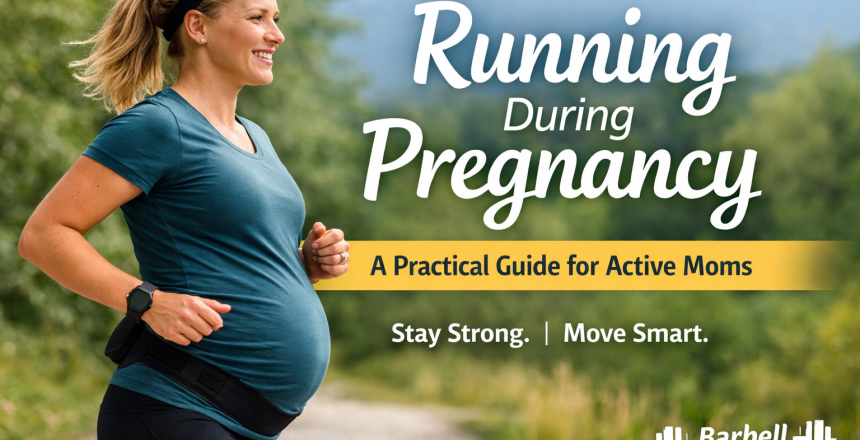
For the mom who wants to keep moving, without fear-based advice
If you’re pregnant and wondering whether it’s “okay” to keep running, the internet can feel incredibly confusing.
One person ran until delivery.
Another stopped at 16 weeks.
A provider may have told you to stop the second anything felt different.
And somewhere in the middle, you’re left wondering:
What’s actually normal?
The truth is, running during pregnancy is highly individual.
There is no magical week where everyone should stop.
There is no universal checklist that tells you exactly what your body should do.
And there is definitely no gold-star prize for running longer than someone else.
What matters most is your body, your symptoms, your goals, and your life right now.
For most runners, yes.
Current evidence is reassuring, even for longer-distance runners. Research continues to show that when your body is already accustomed to that training volume, continuing to run during pregnancy is generally considered safe for both parent and baby.
That includes:
The key isn’t the number of miles.
The key is what your body was already prepared for before pregnancy.
This is where moms often get tripped up.
It’s easy to compare yourself to another pregnant runner online, or even to yourself in a previous pregnancy.
But pregnancy running tolerance is influenced by so many things:
Your injury history matters.
If you were already managing:
…pregnancy may magnify those stress points.
That doesn’t mean you can’t run.
It just means your body may need more support, recovery, or rehab along the way.
Your first pregnancy and your second pregnancy can feel wildly different.
Not because anything is wrong.
Because life is different.
A toddler who doesn’t sleep.
Less recovery time.
More fatigue.
Less time for strength work.
Less opportunity for uninterrupted runs.
This is why comparing pregnancies can be so frustrating.
Your body is not failing.
Your life context changed, and that changes recovery.
As baby grows, your center of mass changes.
Your back may arch more.
Your pelvis widens.
Your glutes may not contribute as efficiently to your stride.
That’s why maintaining lower body strength can make a huge difference in how long running continues to feel good.
Think:
Strength training isn’t separate from running support.
For many pregnant runners, it’s the thing that helps them keep running comfortably.
This part matters so much for mothers.
Sometimes the reason running changes has nothing to do with physical ability.
It’s:
That is still valid.
A change in your running routine does not mean your body “couldn’t handle it.”
Sometimes motherhood logistics are the biggest training variable of all.
This may be the most important takeaway.
A weird run does not automatically mean it’s time to stop running.
Sometimes symptoms simply mean a variable needs adjusting.
Examples:
Instead of immediately removing running, it can be worth asking:
Can we modify first?
For many moms, a small adjustment allows them to keep running comfortably for weeks or months longer.
This part deserves to be said clearly:
Stopping running during pregnancy is not failure.
Switching to cycling, walking, lifting, swimming, or Peloton is not “giving up.”
It’s simply choosing the version of movement that best supports your body and your life right now.
Framework over protocol.
Personalization over pressure.
That’s the real goal.
Running in pregnancy should never be reduced to:
The better question is:
What version of movement helps you feel strong, supported, and like yourself in this season?
For some moms, that’s running until delivery.
For others, it’s stopping in the second trimester.
For others, it changes week to week.
All of those are valid.
Your pregnancy is not a test.
It’s a constantly changing environment that deserves an individualized plan.
And that’s exactly why your movement should be individualized too.

Christina Prevett is a pelvic floor physiotherapist who has a passion for helping women with different life transitions, including postpartum care and menopause.