
For women’s health in particular, that matters. Because for a lot of topics (fertility, pregnancy training, pelvic health, menstrual cycles), the research base is growing—but it’s not always complete. That gap creates the perfect environment for:
overconfident “protocols” that sound scientific
fear-based messaging that spreads faster than nuance
and misinformation (sometimes intentional, sometimes not)
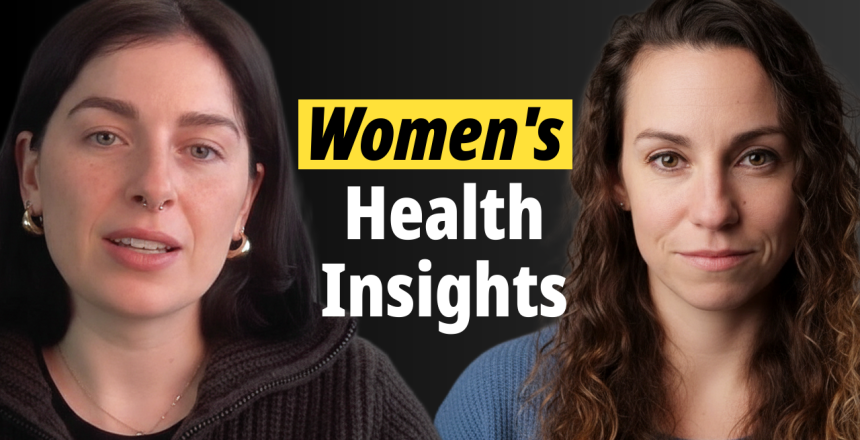
In this episode of the Barbell Mamas podcast, I sat down with Dr. Emily Fender (health communication scientist) to talk about how health misinformation spreads online—and how to become a smarter consumer of health content in 2026.
This isn’t a “delete your apps” post. Social media can be empowering and community-building. The goal is to keep the benefits without getting pulled into the rabbit holes.
Here’s the uncomfortable truth: misinformation isn’t always “totally false.”
A lot of it lives in the gray zone:
a real study, explained without context
a true claim, stated as an absolute
an anecdote, presented like evidence
a “studies show…” statement with no study linked
Platforms reward content that’s simple, emotional, and decisive. Nuance doesn’t travel as fast as certainty.
So the content that performs best often sounds like:
“This will fix your hormones.”
“Never do this if you’re postpartum.”
“All birth control causes weight gain.”
“Cycle syncing is the only way to train.”
Even when there’s a sliver of truth, the delivery can be misleading.
One of the most helpful frameworks Dr. Fender uses in her research is this:
This focuses on:
susceptibility (“this could happen to you”)
severity (“this is really bad”)
Sometimes that’s appropriate—health risks are real. The problem is when it’s only threat.
This focuses on:
what you can do
practical resources
actionable options
When content is high threat + low efficacy, it tends to create anxiety, shame, and “doom scrolling medicine.”
A simple self-check:
If a post scares you but gives you zero next steps… that’s a red flag.
This came up repeatedly in our conversation: people often speak with more confidence than the science actually allows.
This happens for a few reasons:
Some topics don’t have enough high-quality trials yet. So creators fill gaps with:
personal experience
clinical patterns
extrapolation from adjacent research
None of those are inherently “bad”—but the delivery matters.
A helpful standard:
“This is what we know, this is what we think, and this is what we don’t know yet.”
A common misinformation pathway is:
1 study → viral claim → rigid rule.
But science works through bodies of evidence, not a single headline result.
Lived experience can be validating and powerful.
It becomes misinformation when it turns into:
“This happened to me, so it will happen to you.”
If you want a quick, practical filter before you save/share a post—start here.
The creator names the claim clearly (not vague “toxins/hormone imbalance” language)
They cite the source (or link it)
They acknowledge uncertainty or individual variation
They separate anecdote from evidence
They stay in scope (or bring in the right expert)
Absolute language: “all,” “never,” “every time,” “guaranteed”
“Studies say…” with no link, DOI, or clear reference
Scope drift: a credential used as permission to speak on everything
Fear with no solutions
A paid program that relies on you believing you’re broken
Overcomplicated protocols that require privilege to execute
(multiple memberships, supplements, trackers, expensive testing)
If your nervous system spikes and your wallet starts sweating—pause.
Cycle syncing content is everywhere: train one way in follicular, a different way in luteal, adjust diet by phase, etc.
The challenge is that the evidence base is still emerging, and many claims are far more specific than the science can currently support.
A nuance-friendly approach looks like:
track your cycle if it helps you notice patterns
autoregulate intensity when symptoms are real
avoid turning it into rigid rules that make you feel fragile or “less athletic”
A harmful interpretation is when cycle-based content turns into:
“You can’t train hard half the month”
“Women can’t train like men”
“You’re at risk unless you follow this plan”
That’s not empowerment. That’s a new cage with prettier branding.
We also talked about how misinformation can show up even in serious contexts (like hypertensive disorders of pregnancy) when content suggests simple “mindset” or diet fixes for complex physiology.
This is where social media can unintentionally slide into blame:
“If you just did X, you wouldn’t have had this outcome.”
Health doesn’t work like that. You can stack the deck in your favor—without making guarantees.
This one matters: credentials can increase trust, but they don’t guarantee accuracy.
Why?
Some people speak outside scope
Some simplify too aggressively for engagement
Some are repeating what they’ve heard (not what’s true)
Some don’t cite sources and rely on authority instead
A better question than “Are they qualified?” is:
Are they practicing good scientific communication?
transparent sources
appropriate certainty
clear boundaries of expertise
willingness to say “we don’t know yet”
In 2026, we have an additional layer: AI can generate confident misinformation at scale.
Two key risks:
Deepfakes / manipulated clips (your eyes can lie now)
Fake citations (“studies show” + nothing real behind it)
Ironically, this may push us toward something healthier:
skepticism as a skill (not cynicism, not paranoia—just skill).
If something confirms your bias (“This proves my view!”), that’s the moment to double-check, not instantly share.
Use this before you save, share, or spiral:
What is the claim?
If you can’t summarize it clearly, it’s probably vague enough to mislead.
Who is saying it—and are they in scope?
A credential is not a blank check.
What kind of evidence is presented?
Anecdote? One study? A systematic review? Nothing?
Is the language absolute or probabilistic?
Health science lives in likelihoods, not guarantees.
Does it give efficacy-based next steps?
Fear without solutions is a content strategy—not patient care.
Social media can be a powerful tool for:
education
community
advocacy
empowerment
But it’s also a system that rewards certainty over nuance.
So your job isn’t to avoid it completely. Your job is to become a smarter consumer:
Frameworks over protocols.
Curiosity over fear.
Evidence over vibes (but not ignoring lived experience).
And if a post says “studies show…” with nothing linked?
You already know what to do. 😉
If you want more evidence-based women’s health content without the fear tactics, follow along and save this post for your next scroll session.
Share this with a friend who keeps getting pulled into “hormone protocol” rabbit holes.
Listen to the full episode for the deeper nuance and real-world examples.
Health misinformation is content that’s false, misleading, or missing key context—often presented with high confidence and low nuance.
No. Personal stories are valuable for connection and support. They become misleading when they’re presented as universal outcomes or used to make broad claims.
Watch for absolute language (“always/never”), big scary statistics without context, and claims that cite “studies” without linking any actual sources.
Not necessarily. Social media can be helpful, but it works best when you use a quick vetting process and confirm important claims with reputable sources or a trusted clinician.
Christina Prevett is a pelvic floor physiotherapist who has a passion for helping women with different life transitions, including postpartum care and menopause.