
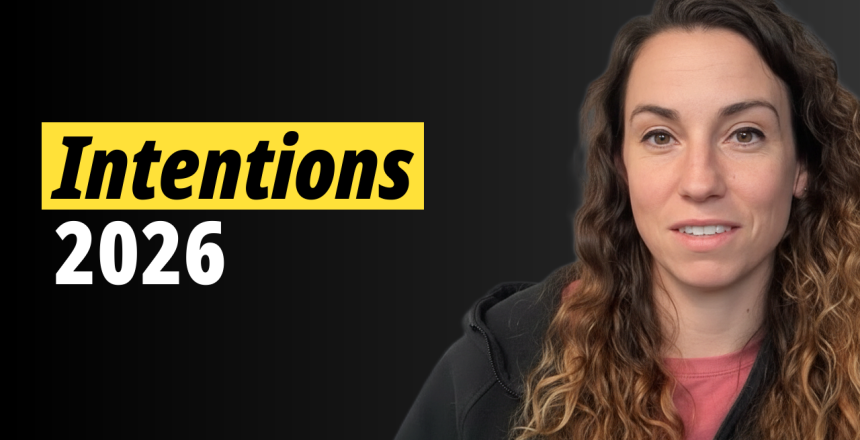
The start of a new year always feels like a strange mix of reflection and anticipation. Work slows down just enough to breathe, while home life—especially with little kids—feels louder and more chaotic than ever. For me, that space away from work is also where creativity shows up. Ideas start flying. I think about the year ahead, what I want to build, what I want to change, and then—importantly—what’s actually realistic.
Over the past few years, I’ve moved away from traditional New Year’s resolutions. You know the ones: checklists, pass/fail goals, rigid outcomes. While I still have a few concrete goals (yes, I’d love to run another half marathon), I’ve shifted much more toward intentions vs
Intentions don’t hinge on perfection. They focus on process, not outcomes. They leave room for building, deconstructing, pivoting—and for being human.
There’s a quote from The Office that’s been sitting with me: “I wish there was a way to know you were in the good old days before you actually left them.” After losing my mom, experiencing miscarriage, and moving through deep grief, that quote has taken on new meaning. It’s made me think about how we hold joy, how we move through hard seasons, and what we anchor our goals to.
So for 2026, I’ve been reflecting on a set of intentions—especially through the lens of pregnancy, postpartum, motherhood, and midlife. Here are the themes I keep coming back to.
When it comes to health goals, so many resolutions still center on weight or weight loss. Instead, I’m encouraging a shift toward performance-based goals.
What if, instead of “lose five pounds,” the goal was:
Run a half marathon
Squat 100 pounds consistently
Do five unassisted push-ups
Improve hip mobility or squat depth
Here’s the thing: when we focus on performance, body composition often changes as a consequence, not the driver. Training volume increases, sleep improves, nutrition becomes more intentional, and a positive feedback loop starts to form.
This matters deeply in postpartum, when body changes can feel confronting and permanent. It also matters as we age. Our bodies will change—skin, composition, wrinkles, all of it. I often think about my future self looking back and wishing I hadn’t spent decades hating my body for how it looked instead of appreciating what it allowed me to do.
Watching my mom struggle with body image even during cancer treatment drove this home for me. She spent so much of her life wishing for a different body, only to later wish she had the body she once criticized. That “perfect” time never came.
So my intention for 2026? Anchor goals in capability, not shame.
January is infamous for restrictive diet plans. Cut sugar. Cut carbs. Cut everything fun.
But when we tell ourselves we can’t have something, our scarcity brain kicks in. We overcompensate, binge, and swing between extremes.
Instead, what if we focused on adding things in?
For our family, that looks like:
More vegetables (we’re okay—but not great—here)
A deliberate increase in fiber
Fiber intake is shockingly low in many modern diets, and low fiber is associated with increased cancer risk. So yes, I’ve been sneaking chia seeds into everything—and my husband finds it hilarious.
The key here isn’t perfection. It’s adding supportive behaviors that crowd out less helpful ones naturally.
Big, dramatic challenges sound inspiring—but they’re rarely sustainable.
Instead, I’m leaning into habit stacking and incremental change. One small example: I started making coffee the night before. That one tiny step made early mornings easier.
I didn’t jump from 6:30 a.m. wake-ups to 5:00 a.m. overnight. I moved five minutes at a time—6:30 to 6:25, then 6:20, and so on. Over weeks, I landed at 5:15 without shocking my system.
Small changes compound. That’s the point.
So many intentions revolve around physical health—but mental health often gets ignored until we’re burnt out.
Middle life is… a lot. Careers peak, kids need you, relationships require effort, and life throws curveballs. Add a constantly stressful news cycle and social media, and our nervous systems rarely get a break.
For me, mental health intentions look like:
A daily 10-minute mindfulness meditation
Gentle yoga a few times a week (sometimes with kids climbing on me)
Building in small nervous system “resets” during the day
These aren’t luxuries. They’re maintenance.
One of the biggest lessons of 2025 was this: life doesn’t wait for a convenient moment to get hard.
In the busiest professional season of my career, I lost my dog, had a miscarriage, and lost my mom. I learned two things: life can feel deeply unfair—and humans are incredibly resilient.
Suffering is inevitable. That idea, rooted in Buddhist philosophy, has actually been freeing for me. When I stopped assuming life would be smooth, setbacks stopped feeling like personal failures.
Intentions help here because they aren’t pass/fail. A hard day doesn’t mean the year is ruined.
Finally, I always encourage choosing a word or phrase for the year.
My word for 2026 is calm.
Calm doesn’t mean doing less because I don’t care. It means being intentional about where my energy goes. Quiet consistency. Fewer overextensions. Less chaos disguised as productivity.
If 2025 was about survival, 2026 is about sustainability.
As we move into this year, my hope is that intentions give you permission—to soften, to pivot, to keep going even when things aren’t perfect. If you have a word, a phrase, or intentions you’re sitting with, I’d genuinely love to hear them. Those reflective, vulnerable conversations matter.
Here’s to a calmer, more intentional 2026.
Christina Prevett is a pelvic floor physiotherapist who has a passion for helping women with different life transitions, including postpartum care and menopause.